What does a set look like when printed? This question invites an exploration into the fascinating world of mathematical sets, a fundamental concept that underpins various domains from mathematics to computer science. By understanding how sets are visually represented, including their printed forms, we can appreciate their importance in organizing and simplifying information. Sets are not merely abstract collections; they can be depicted in various styles and formats, enhancing our comprehension and facilitating communication.
The visual representation of sets can take many forms, from basic printed lists to more complex diagrams like Venn diagrams, which illustrate relationships between different sets. As such, their printed representations play a crucial role in both educational contexts and practical applications, enabling a clearer understanding of data relationships and categorizations.
Definition of a Set
In mathematics, a set is a well-defined collection of distinct objects, considered as an object in its own right. You can think of it as a basket where you toss in a bunch of fruits, but each fruit is unique. No duplicates allowed! Sets can contain numbers, letters, or even other sets. Now, that’s a party with no room for the same fruit twice, or as I like to say, no kue lempung that tastes the same!A set can be categorized as finite or infinite based on the number of elements it contains.
A finite set has a limited number of elements, like the set of all Betawi dishes on your dining table during a family gathering. In contrast, an infinite set goes on forever, like the number of stars in the sky or, more relatable, the number of times you can argue over the best way to make soto Betawi.
Examples of Finite and Infinite Sets
To understand these concepts better, let’s explore some examples. Here are the distinct categories:
- Finite Set: Consider the set of even numbers less than 10: 2, 4, 6, 8. This is a finite set because it has a clear endpoint – just like how you can only eat so much kerak telor before you burst!
- Infinite Set: The set of all natural numbers: 1, 2, 3, …. This set is infinite as it goes on forever, much like the conversations you have with your neighbors about who has the best nasi uduk.
The notation of sets is crucial as it provides clarity and structure. Typically, sets are denoted by curly braces , and the elements within them are separated by commas. Recognizing the symbols and notations used in set theory can help you navigate various mathematical problems with ease.
“A set is a collection of distinct objects considered as a whole.”
In conclusion, understanding the concepts of sets—both finite and infinite—is essential in mathematics. These foundational building blocks allow us to explore more complex ideas and solve various problems, much like understanding the importance of each ingredient in a perfect rendang.
Visual Representation of Sets
When we talk about sets, it’s not just about numbers and elements; it’s like gathering your friends for a makan-makan (feast)! Imagine a plate filled with different dishes; each dish represents an element of a set. In printed form, sets are usually depicted using curly braces, like a, b, c, giving it a neat and tidy look, just like your mom’s kitchen after a good cleanup.
Printed Representation of Sets
Sets can come in various forms, and their printed representation can tell you a lot about them. Here’s a quick overview of different types of sets and how they look:
| Type of Set | Example |
|---|---|
| Empty Set | |
| Singleton Set | 1 |
| Finite Set | 2, 4, 6, 8 |
| Infinite Set | 1, 2, 3, … |
| Universal Set | all elements in a particular context |
In this table, you can see how each set has its unique representation. The empty set is like an empty plate—nothing on it, but still part of the party! A singleton set is like your one friend who always orders the same dish. Finite sets are well-contained, while infinite sets are like the never-ending buffet line. And don’t forget about the universal set, which is like your whole neighborhood invited to the gathering!
Venn Diagrams for Visual Representation
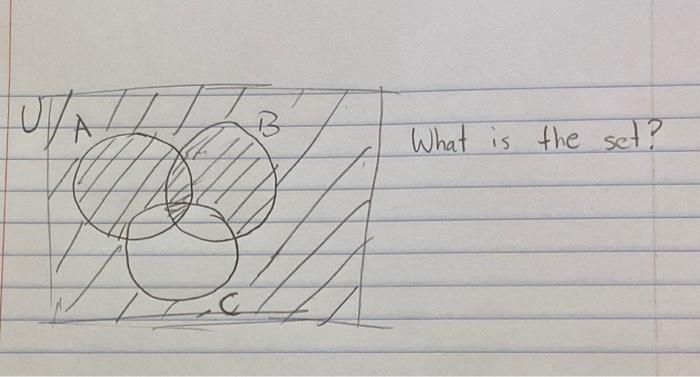
Venn diagrams are a fantastic way to visualize sets. You can think of them as colorful circles that dance together on a page, showing how different sets relate to each other. Picture a Venn diagram with two overlapping circles: one circle represents set A, and the other represents set B. The overlapping part shows the elements that are common to both sets, just like how some of your friends might enjoy both nasi goreng and mie goreng.
When you draw these diagrams, you can quickly see relationships like intersections, unions, and differences. For example, if set A contains nasi goreng, sate and set B contains sate, bakso, the overlapping area would show sate. Here’s a simple way to visualize it in text:
Circle A
nasi goreng, sate
Circle B
sate, bakso
Overlap
sateUsing Venn diagrams helps clarify complex relationships between sets while adding a bit of flair to your math presentations, reminding everyone that math can be as fun as a good ol’ Betawi gathering with all your favorite dishes!
how to find printer ip address. And if you wanna know what does collate mean in printing, it’s about making sure your prints come out nice and organized. Check this for the scoop: what does collate mean in printing.
Printing Sets in Different Formats
In the world of programming, presenting data clearly can be as important as the data itself. When it comes to sets, whether in Python or Java, knowing how to print them properly is crucial to avoiding confusion. You want your sets to pop like a plate of kerak telor at a Betawi market, right? So, let’s dive into how you can make your sets shine when printed out or displayed.
Methods for Printing Sets in Programming Languages
Printing sets varies by programming language, but the goal remains the same: clarity. There are several methods you can employ depending on your chosen language. Below, we’ll look at how to handle sets in both Python and Java.To start off, here’s how you can print a set in Python:
```python
# Create a set in Python
my_set = 1, 2, 3, 4, 5

# Print the set
print("My Set:", my_set)
```
This straightforward code creates a set and then prints it out. Easy-peasy, like making soto betawi!
In Java, the process looks a bit different. Here’s a simple example:
```java
import java.util.HashSet;

public class Main
    public static void main(String[] args)
        HashSet  mySet = new HashSet<>();
        mySet.add(1);
        mySet.add(2);
        mySet.add(3);
        System.out.println("My Set: " + mySet);


```
In this Java example, we use a HashSet to hold our integers and print them out. It might look a bit more complicated than Python, but it’s just as effective. It’s like switching from nasi uduk to nasi goreng; both are delicious!
Formatting Options for Displaying Sets in Reports or Presentations
When it comes to displaying sets in reports or presentations, formatting can make a world of difference. You want your audience to understand your data without needing a second cup of kopi tubruk. Here are some formatting options you might consider:
Utilizing tables is a great way to present your sets. Tables not only help organize information neatly but also make comparisons much easier.
| Element |
|---|
| 1 |
| 2 |
| 3 |
Another effective method is using bullet points to list elements in a simple and readable manner. This way, your audience can quickly grasp the essentials without getting bogged down.
- 1
- 2
- 3
For more advanced presentations, you might want to use charts to visually represent data from your sets. A pie chart or bar chart can turn numbers into visuals, making it easier for your audience to digest the information—like how a vibrant plate of gado-gado grabs your attention!
Always remember, the way you format your data can significantly enhance understanding and retention.
Applications of Sets in Real Life
In our daily lives, sets might not seem like a big deal, but believe me, they pack a punch! Just like how we Betawi folks love our Kerak Telor, sets help us organize and manage our data in ways that make life easier, more efficient, and sometimes even fun. Whether you’re crunching numbers or just planning a get-together, sets are there, working silently in the background like a good old-fashioned Betawi family gathering.
Sets play a crucial role in data science and statistics, providing a foundational framework for organizing and analyzing information. They allow data scientists to group similar data points together, making it easier to draw conclusions and make decisions. For instance, when analyzing customer purchase behavior, a data scientist might create sets for different customer demographics, enabling them to identify trends within each group.
This kind of classification simplifies the process of data analysis and leads to more accurate predictions.
Examples of Sets in Everyday Scenarios
Sets are not just for the tech-savvy; they sneak into our everyday lives like a thief in the night! Let’s look at a few relatable scenarios:
– Shopping Lists: Imagine you’re heading to the market. You make a set of all the items you need—say, vegetables, fruits, and snacks. This helps you avoid buying duplicates and ensures you get everything on your list without wandering off to buy that tempting “keripik” that catches your eye!
– Event Planning: When arranging a wedding or a family reunion, you compile a set of invitees. By organizing your guests into sets—like family, friends, and colleagues—you can easily manage RSVPs and plan seating arrangements. It’s like playing a game of Tetris, fitting everyone in their right spots!
– Classifying Data: Take a classroom, for example. A teacher could group students based on their skills—sets of advanced, intermediate, and beginner students—allowing for tailored teaching methods that suit everyone’s level. Better learning for all!
Simplifying Complex Information in Decision-Making
When faced with myriad choices, sets can be your best friend in making sense of it all. Here’s how they help:
– Breaking Down Information: Sets allow us to categorize information into manageable portions. Using a set, a project manager can separate tasks by priority, like urgent, high, and low priority. This clear categorization helps in focusing on what truly matters.
– Venn Diagrams: A popular visual tool in statistics, Venn diagrams use sets to show relationships and intersections between different categories. For instance, if you’re deciding on a vacation spot, you can create sets for budget, activities, and weather preferences. The overlapping area helps you find the perfect destination!
“Sets help transform complex data into clear insights, leading to better decisions and smarter choices.”
– Decision Trees: Sets help in constructing decision trees, which visualize different outcomes based on choices made. Each branching point represents a set of options, guiding individuals through decisions like which route to take for a road trip or what to order at your favorite Betawi restaurant.
In summary, from data science to daily decision-making, sets are the unsung heroes of organization and clarity, making the chaotic world a little more structured, just like a well-made Betawi dish!
Comparison of Set Representations

In the colorful world of mathematics, representing sets can be as diverse as the many flavors of kerak telor. Each method offers a unique perspective on the same delicious dish that is a set. As we dive into the comparison of printed sets and visual representations, let’s add a sprinkle of Betawi humor to make it more palatable.
When it comes to visualizing sets, one can choose between printed text and graphical representations. Both methods have their own merits, akin to choosing between a plate of soto and a bowl of rawon. Printed sets are straightforward, while visual representations can provide a clearer picture of how elements interact. However, each has its own advantages and disadvantages, which can make your choice as tricky as picking the best kue from a street vendor.
Advantages and Disadvantages of Set Display Methods
Understanding the strengths and weaknesses of various set representations can help in selecting the most appropriate format for a given context.
The following table summarizes the advantages and disadvantages of printed sets versus visual representations:
| Representation Method | Advantages | Disadvantages |
|---|---|---|
| Printed Sets |
|
|
| Visual Representations |
|
|
Choosing the right representation often depends on the audience and the complexity of the information being conveyed. For example, a classroom of students might grasp printed sets better when learning the basics, while a data analyst might prefer visual graphs to convey detailed insights.
“The method of representation can make or break the understanding of a set; choose wisely!”
By recognizing the strengths and weaknesses of printed and visual representations, one can effectively communicate the essence of sets, ensuring that the audience leaves with a full understanding, just like finishing a hearty bowl of nasi uduk on a rainy day.
Challenges in Set Representation

In the world of sets, presenting the elements clearly can be as tricky as trying to catch a slippery ikan lele (catfish) with your bare hands! When you want to display sets, there are several challenges that can pop up, especially when it comes to readability and clarity. Let’s dive into some of these challenges and see how we can tackle them like a pro.
Common Issues in Printing or Displaying Sets, What does a set look like when printed
When printing or displaying sets, various common issues might arise that can confuse readers or students. These include misinterpretation of elements, lack of context, and cluttered presentations that make it difficult to understand the relationships between different sets. For instance, if a set is represented with too many elements or unclear boundaries, it can be like reading a menu at a crowded street food stall—overwhelming and confusing!
To tackle these problems effectively, ensuring that each representation is clean, organized, and has a clear purpose is essential. Using proper formatting can make all the difference in how a set is perceived by the audience.
So, if you’re trying to figure out your printer’s IP address, it’s actually super easy. Just check out this link on how to find printer ip address and you’ll be good to go! Also, if you’re into printing, you might’ve heard people talk about collating. Like, what does it even mean? It’s all about organizing your printouts, and you can learn more about what does collate mean in printing to get the deets on that.
Pretty neat, right?
Improving Readability and Clarity in Printed Sets
To make sets more readable and easier to understand, it’s important to adopt certain strategies. Here are some practical tips to enhance the clarity of set representations:
- Use clear labels and headings for each set, like how you would label your favorite sambal—everyone should know which one is spicy!
- Limit the number of elements displayed to avoid overcrowding; sometimes, less is more, just like a good bowl of soto.
- Incorporate visual aids such as diagrams or Venn diagrams; these can help illustrate relationships between sets, similar to how a map helps you find the best warung (small restaurant).
- Consistently use symbols and notations that are widely accepted; for example, using ‘∈’ for membership makes it easy for everyone to understand, just like using ‘nasi’ to mean rice.
Best Practices for Presenting Sets in Educational Materials
When it comes to educational materials, presenting sets effectively can greatly enhance learning. Here’s a list of best practices that educators can follow to ensure students grasp the concept of sets without any hassle:
- Introduce sets with relatable examples that connect to students’ everyday experiences, like grouping favorite snacks or toys.
- Utilize color coding in diagrams to help distinguish between different sets, making it visually engaging—like a vibrant plate of gado-gado!
- Provide step-by-step guidance on how to interpret set notations; breaking down complex ideas can make them accessible, just like teaching someone to make a perfect cup of kopi tubruk.
- Encourage interactive activities where students can create their sets using real-life objects, fostering an experiential learning environment.
Clear communication in set representation is key to understanding and effective learning.
Future Trends in Set Representation
As we look to the future, the realm of set representation is poised for some exciting changes, thanks to technological advancements and innovative methodologies. Just like a Betawi dish that evolves while still retaining its rich flavors, the representation of sets is set to morph, enhancing clarity and understanding in data visualization and education. These changes promise not only to simplify our interaction with sets but also to enrich our learning experiences.
Advancements in Technology Affecting Set Printing
The integration of cutting-edge technology in set representation is likely to revolutionize how we print and visualize sets. With the rise of augmented reality (AR) and virtual reality (VR), sets can be represented in 3D, allowing for interactive exploration. Imagine being able to “walk through” a set where each element is a colorful Betawi snack, and you can click on each one for more details! This immersive experience can enhance understanding, especially for visual learners.
Moreover, advancements in printing technology, like 3D printing, could bring a tactile dimension to set representation. Imagine holding a printed model that represents a mathematical set – you could literally feel the elements! Such technology could find applications in educational settings, making abstract concepts more tangible and relatable.
If you’re trying to figure out how to find your printer’s IP address, it’s super simple! Just check your printer’s settings or print a network configuration page. For a full guide, you can peep this link: how to find printer ip address. Now, about printing, if you’ve ever wondered what does collate mean in printing, it’s basically about organizing your prints in order.
Check it out here: what does collate mean in printing.
Emerging Tools for Visualizing Sets in Data Analytics
The world of data analytics is buzzing with new tools that are reshaping how we visualize sets. These tools leverage machine learning and artificial intelligence to provide dynamic visualizations that can adapt to user behavior and preferences. For instance, platforms like Tableau and Power BI are increasingly using algorithms to suggest the most relevant visual representations of data sets, making it easier to spot trends and patterns without wading through mountains of data.
In addition, the rise of programming languages like Python, with libraries such as Matplotlib and Seaborn, allows for versatile and customizable set representations. Data scientists can create sophisticated visualizations that reflect complex relationships within data, presenting sets in a way that’s as engaging as a Betawi street food market, where every stall tells a story.
Evolution of Set Representation in Educational Contexts
Set representation in education is on the cusp of transformation, influenced by new pedagogical approaches and technological innovations. The use of gamification in learning environments is expected to enhance student engagement. For instance, students might use apps that turn set operations into fun challenges, where they collect “elements” in a scavenger hunt style, or even participate in virtual competitions that involve set theory puzzles.
Furthermore, with the increased accessibility of online learning platforms, educators can now share dynamic visual content with students across the globe. Interactive simulations can allow learners to manipulate sets in real-time, deepening their comprehension. This approach can lead to a richer understanding of not only the concept of sets but also their practical applications in real life.
In essence, the future of set representation is bright, promising an array of tools and methodologies that will make learning about sets as delightful as indulging in a plate of ketupat sayur. The integration of technology, coupled with creative educational strategies, will cultivate a new generation of problem solvers who appreciate the elegance and utility of sets in our daily lives.
Final Review

In summary, the printed representation of sets is integral to both theoretical mathematics and practical applications. From simple lists to sophisticated visual aids, understanding how sets look when printed provides insight into their utility in data organization and analysis. As advancements in technology continue to evolve the ways we visualize and print sets, it will be exciting to see how these representations enhance our understanding of complex information in the future.
Commonly Asked Questions: What Does A Set Look Like When Printed
What is the definition of a set?
A set is a collection of distinct objects, considered as an object in its own right in mathematics.
What are finite and infinite sets?
Finite sets have a limited number of elements, while infinite sets have no bounds and contain an endless number of elements.
How can sets be visualized?
Sets can be visualized using various methods such as Venn diagrams, tables, and even graphical representations.
What programming languages can print sets?
Common programming languages such as Python and Java offer built-in functions to print sets easily.
Why is set notation important?
Set notation provides a clear and standardized way to describe sets, making it easier to communicate mathematical ideas.


